8 April 2026 · 12 min read
Questions to Ask Before Buying a Veranda (And Red Flags to Watch For)
A veranda is a significant investment. The right questions will save you thousands — and the wrong company can cost you far more than money.
Buying a veranda is one of the bigger home improvement decisions you will make. A good one transforms how you use your garden for decades. A bad one — wrong product, wrong installer, wrong company — can leave you with a structure that leaks, sags, voids your home insurance, or simply was not what you were promised.
The problem is that the veranda industry in the UK is largely unregulated. Anyone with a van and a set of tools can call themselves a veranda installer. Some of them are excellent. Some of them are decidedly not. And from the outside, it can be very difficult to tell the difference until it is too late.
The good news is that the right questions make the difference obvious very quickly. A confident, competent company will welcome every question on this list. A company that gets evasive, defensive, or pushy when you ask them is telling you everything you need to know — even if the answer is not what they intended.
This guide is not about selling you a veranda from us. It is about making sure that whoever you buy from — whether that is The Good Veranda Company or someone else entirely — gives you a fair deal on a product that will last. Save this page, print it out, bring it to every conversation you have with a veranda company.
Questions About the Product
The first thing to understand is what you are actually buying. Not all verandas are built equal, and the differences in materials, engineering, and origin can mean the difference between a structure that lasts 25 years and one that starts showing problems in five.
What sort of system is it, and where is it made?
A reputable veranda company should be able to tell you clearly where the system is manufactured, what it’s made of, how it’s engineered, and why they’ve chosen to work with it. You don’t necessarily need to know the supplier’s brand name — companies will often treat their supplier relationships as commercially sensitive, just as any reseller would — but you absolutely should understand the product specification.
If a company is vague about the basics — “it’s just a premium aluminium system” without being able to explain the engineering, the materials, the warranty, or the country of origin — that is a concern. It suggests they don’t fully understand what they’re selling.
Where is it manufactured?
Veranda systems sold in the UK generally come from one of two places: the Netherlands or Britain. Both produce excellent products, but they have different design philosophies, different engineering approaches, and different strengths. Dutch systems tend to offer wider configuration options, while British-engineered systems often feature heavier-gauge aluminium and longer structural warranties. Knowing the origin helps you compare like with like when you are getting multiple quotes.
What is the expected lifespan?
A well-engineered aluminium veranda should last decades — not years. Ask for a specific figure, not a vague “it will last a lifetime.” Different systems have genuinely different lifespans depending on the quality of the aluminium profiles, the powder coating process, and the engineering of the joints and fixings. For a quality product, you should be hearing figures in the range of 25 to 60 years. If the answer is much lower than that, you are probably looking at a budget system — which is fine if you know that going in, but not if you are paying premium prices.
What warranty do you provide?
Ask to see the warranty documentation in writing before you commit to anything. A verbal promise of “ten years, no problem” is worthless if the company does not exist in five years’ time, and it is equally worthless if the warranty has exclusions that effectively void it for any real-world issue. You want to know: How long is the structural warranty? What does it cover — the frame, the finish, the roof panels, the installation? What voids it? Is the warranty backed by the manufacturer, the installer, or both?
What grade is the powder coating?
This is a question most buyers do not think to ask, but it matters more than you might expect. Powder coating is what protects the aluminium from fading, chalking, and weather damage over the long term. The industry standard is Qualicoat Class 1, which is acceptable for most inland locations. Marine-grade coating (Qualicoat Class 2 or equivalent) provides significantly better protection against UV exposure, salt air, and pollution. If you live near the coast or in an urban area with higher pollution, the difference in long-term durability is substantial. Ask what grade is being used, and do not accept “high-quality powder coating” as an answer — that could mean almost anything.
What roof options are available?
Most veranda systems offer a choice between glass and polycarbonate roofing, though some offer only one or the other. The roof material affects the look, the light quality, the heat underneath the structure, the noise during rain, and the price. Make sure you understand which roof material is included in the quoted price and what the alternative would cost. Some companies quote polycarbonate as standard and charge a significant uplift for glass — others include glass as default. If you are still weighing up the two options, our glass vs polycarbonate comparison covers the trade-offs in honest detail.
Write it down. After every conversation with a veranda company, make a note of what they told you — where the system is made, the lifespan claim, warranty terms, coating grade, and roof options. If these details change between your first conversation and your second, that is a red flag worth paying attention to.
Questions About Installation
A veranda is only as good as its installation. The best system in the world will underperform if it is fitted badly — poor drainage, inadequate fixings, misaligned panels. These questions help you understand what the installation process actually involves and who is doing the work.
How long does installation take?
A standard veranda installation typically takes one to two days. Larger builds, or those with multiple side options, electrical work, or unusual site conditions, may take two to three days. If a company cannot give you a clear timeframe, or if their estimate seems significantly outside this range in either direction, ask them to explain why. A half-day quote for a large veranda suggests corners being cut. A two-week quote suggests inexperience. For a detailed walkthrough of what a well-run installation looks like, see our installation process guide.
What preparation is needed on my end?
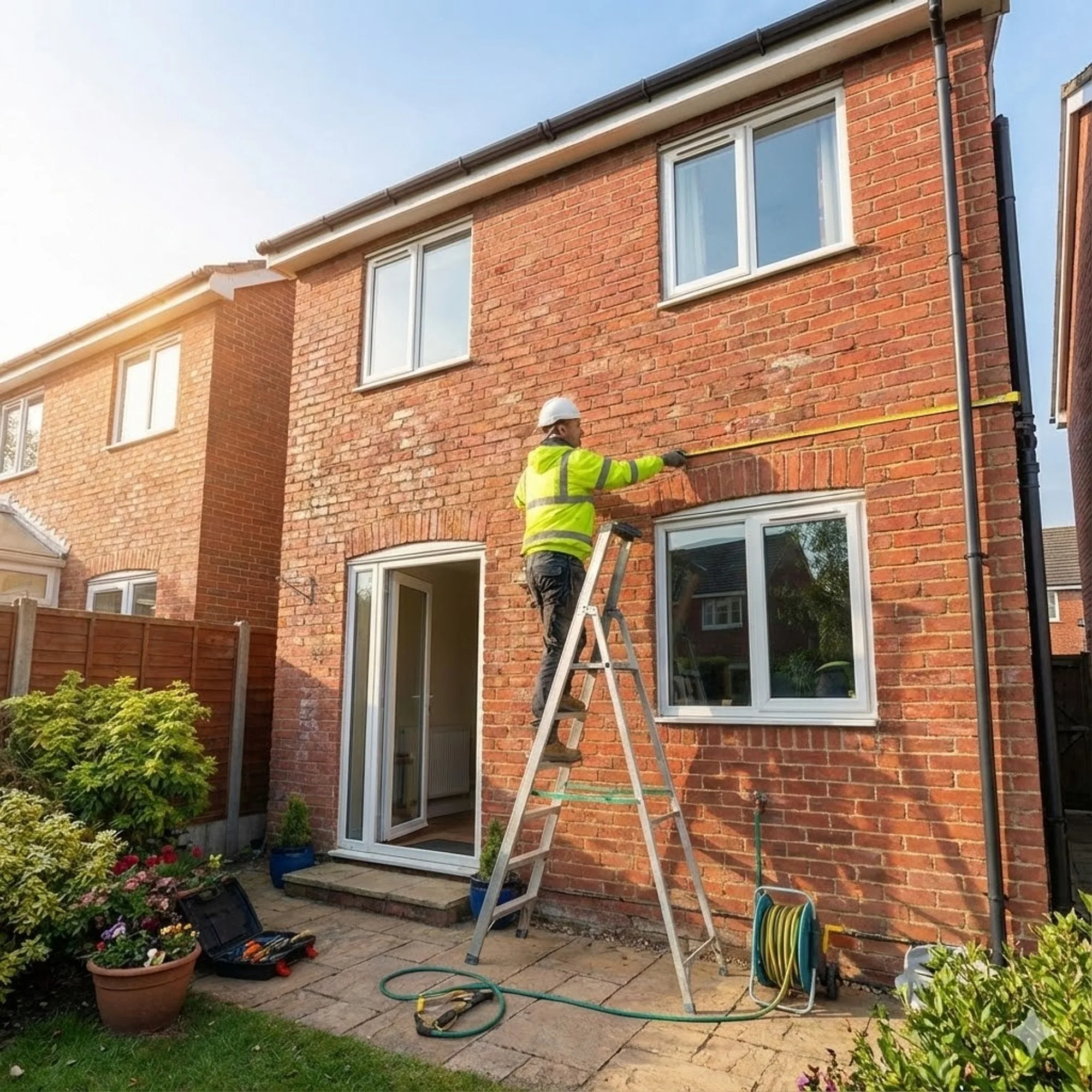
Most verandas are fixed to an existing patio or concrete base. You need to understand whether your current ground surface is suitable, whether any levelling or preparation work is needed, and — critically — whether that preparation is included in the quote or will be charged separately. Groundworks such as laying a new concrete base or levelling an uneven patio can add a significant sum to the project if you are not expecting it. A good company will assess your ground conditions during the survey and tell you upfront what, if anything, needs doing.
What happens if there is a problem after installation?
Things can go wrong with any building project. What separates good companies from bad ones is how they handle it. Ask about their aftercare process before you commit. Is there a dedicated contact for post-installation issues? What is the typical response time? Will they come back to fix snagging issues at no extra cost, and within what timeframe? A company that is confident in its installation quality will answer these questions without hesitation, because they rarely have to deal with serious problems.
Want to See Exactly What Our Installation Process Looks Like?
We have documented every step — from initial survey to final sign-off — so you know precisely what to expect.
Read the Installation Guide Get an Instant QuoteQuestions About Pricing
Veranda pricing is where the biggest misunderstandings happen — and where the biggest nasty surprises are hiding. Two quotes that look similar on the surface can be wildly different in what they actually include. These questions make sure you are genuinely comparing like with like.
Does the quote include installation?
You would be surprised how often the answer is no. Some companies quote the product price only, then add installation as a separate line item that appears later. Others include it as standard. You need to know which you are dealing with, because the installation cost on a veranda is not trivial — it can represent 20–30% of the total project cost. A quote of £6,000 supply-only and a quote of £8,000 fully installed may actually represent the same final price once installation is added to the first one.
Does it include VAT?
Always check. A quote that says “£8,000” but excludes VAT is actually £9,600. Some companies present ex-VAT prices to appear more competitive on paper, particularly in initial conversations or on their websites. Always ask for the final, VAT-inclusive figure before making any comparison.
What is not included in the quote?
This is the question that catches people out most often. Even a comprehensive-looking quote may exclude things like: groundwork or base preparation, electrical work for integrated lighting or heaters, removal and disposal of an existing structure, skip hire for waste, scaffolding if access is difficult, or building regulation applications if applicable. Ask explicitly what falls outside the quoted price, get the answer in writing, and factor those costs into your comparison.
What are the payment terms?
Understand exactly when you need to pay, how much at each stage, and what triggers each payment. A reasonable structure is clearly staged: a deposit on order (which funds manufacturing of your bespoke structure), a further payment when the materials arrive or before installation begins, and a final balance on completion once you are satisfied with the work. We will cover the specific red flags around payment terms in the next section — but the key principle is that a meaningful portion of the total should always be held back until after installation, so you retain leverage right up to the end of the project.
For a complete breakdown of what a veranda actually costs in 2026, including all the extras that people frequently forget about, read our full pricing guide. And if you want a quick indication of what your specific setup would cost, our online quoter gives you a real, all-inclusive figure in under two minutes — no phone call, no home visit, no obligation whatsoever.
The total cost test. Ask every company you speak to the same question: “What is the total amount I will pay, including absolutely everything, for a finished veranda I can sit under?” If they cannot give you a straight answer to that question, that tells you something important about how they do business.
Questions About Planning
Planning permission is one of the most common worries for people considering a veranda, and unfortunately it is also an area where misinformation is rife. Some companies will tell you that you definitely do not need planning permission without actually checking your circumstances. Others will use planning concerns as a scare tactic to rush you into a decision. Neither approach serves you well.
Do I need planning permission?
Modern aluminium verandas very rarely require planning permission in the UK. They typically fall under permitted development rights, which means you can build them without making a formal planning application. However, there are exceptions — listed buildings, properties in conservation areas, flats, and certain boundary situations can all change the rules.
A good veranda company will ask about your property circumstances and advise you honestly based on what you tell them. If they say “no planning permission needed” without asking a single question about your property, they are guessing rather than advising — and their guess could leave you with an enforcement notice. For a thorough explanation of when planning permission is and is not required, see our planning permission guide.
What about building regulations?
Building regulations and planning permission are two different things, and people often confuse them. Most freestanding or lean-to verandas do not require building regulations approval. However, there are scenarios where they might — particularly if the structure affects drainage, if you are removing existing patio doors to create an open-plan connection to the house, or if electrical work is being done that needs certifying. Ask your veranda company whether building regulations apply to your specific project, and do not accept “probably not” as an answer. If they are not sure, a good company will tell you to check with your local authority rather than dismissing the question.
A trustworthy company will never wave away planning questions. They will either know the answer for your specific situation or tell you honestly that you should check with your local planning authority. Anyone who tells you “don’t worry about it” without understanding your property is not acting in your interest.
Red Flags to Watch For
Now for the section that might save you the most money — and the most stress. These are the warning signs that should make you pause, ask harder questions, or walk away entirely. None of these are absolute guarantees that a company is dishonest. But each one is a pattern we have seen repeatedly from companies that leave customers disappointed, out of pocket, or both.
If you encounter three or more of these red flags with the same company, we would strongly recommend getting quotes elsewhere before making any commitment.
“This price is only valid today.” This is high-pressure sales, plain and simple. A genuine price does not expire at midnight. If a company will not honour the same price next week, ask yourself why. Legitimate businesses set prices based on materials and labour costs, not on whether you sign before the salesperson leaves your kitchen. If the price is fair today, it will still be fair on Thursday. And if it is not fair, the pressure to sign quickly is designed to stop you from finding that out.
They will not provide a written quote. A verbal price is not a quote. It is a number someone said out loud, and it can change at any time for any reason. If a company will not put the full specification, the price, and the terms in writing, they are leaving themselves room to change things later — the price, the spec, the timeline, the inclusions. Always insist on a written, itemised quote before making any commitment. If they resist this entirely reasonable request, walk away.
No fixed business address. Check whether the company has a physical address — not just a PO box, a mobile number, or a generic “serving the South East” footer on their website. Look them up on Companies House. A legitimate veranda company will have a registered business address, a company number, and a verifiable trading history. This matters because if something goes wrong two years after installation, you need to be able to find them. A company with no traceable address can simply disappear.
They cannot explain the product specification. A company should be able to tell you clearly where the system is manufactured, what materials it uses, how it’s engineered, the expected lifespan, and the warranty terms. If they can’t answer these basic questions — or they dodge them entirely — it suggests they don’t understand what they’re selling. Note that many companies will keep the name of their specific supplier confidential for commercial reasons, which is normal; what matters is that the product specification itself is transparent.
No clear product information. A veranda company should be able to show you detailed product photography, full specifications, colour options, side option details, and warranty terms. Any serious company will have this information readily available on their website or in printed materials. If you have to prise basic product details out of a company, that’s a sign that they either don’t know their own product well or don’t want you comparing it to others.
Full payment demanded upfront. Deposit structures vary across the industry. Some companies take a small booking deposit, while others take a larger initial payment to cover the manufacturing of bespoke materials — a veranda is made to order, not pulled off a shelf. What matters is that the payment schedule is clearly staged in writing, and that a meaningful balance (typically at least 10%) is only due after installation is complete. Walk away from any company asking for 100% upfront before work has even started — at that point you have no leverage at all if things go wrong.
Warranty not provided in writing before you commit. “Don’t worry, you will get the warranty paperwork after installation” is not good enough. You need to know exactly what is warranted, for how long, by whom, and under what conditions, before you hand over any money. If a company will not show you the warranty terms upfront, you should assume the warranty is worth considerably less than they are claiming in conversation.
Badmouthing competitors instead of explaining their own product. A company that spends more time telling you why everyone else is terrible than explaining why their own product is good is usually compensating for something. Confidence sounds like clear, specific explanations of what they offer and why it works well. Insecurity sounds like “whatever you do, don’t go with them, their verandas fall apart after two years.” A company secure in its own product does not need to tear down the competition to make a sale.
The overnight test. If a company makes you feel uncomfortable about taking time to think, that discomfort is information. A good product from a good company will still be available tomorrow. Any urgency is manufactured, and it is manufactured for their benefit, not yours.
What Good Looks Like
It is easy to focus on red flags, so let us be equally clear about what a positive experience looks like. When you are dealing with a company that genuinely deserves your business, you will notice these things:
Transparent pricing with everything itemised. You know exactly what you are paying for, what is included, and what is not. The price includes installation and VAT as standard, and any potential extras are clearly listed and explained before you commit to anything.
Clear product information. They can tell you where the system is made, what materials it uses, the engineering behind it, the expected lifespan, and the warranty terms. They welcome your questions about the product because they know it inside out and they are proud of what they sell.
Warranty provided in writing before any commitment. You can read the warranty terms at your leisure, understand what is covered and what is excluded, and verify that the warranty provider is a real, established entity. No surprises after the fact, no verbal promises that mysteriously do not appear in the paperwork.
Detailed product photography and specs. Clear photographs of the product range from multiple angles, plus full specifications, colour options, side option details, roof options, and warranty terms. A company confident in what it sells will make all of this easy to find on their website — because they want you to be able to evaluate the product properly before getting in touch.
No pressure to decide immediately. They give you the information you need, answer every question thoroughly, and let you take whatever time you need to make your decision. They may follow up politely, but they never push, never create false urgency, and never make you feel that hesitating will cost you something. They understand that a considered decision is better for everyone — including them.
Honest about limitations. No product is perfect for every situation, and no company can do everything. A trustworthy company will tell you when their product is not the right fit for your property, when a different model or material would serve you better, or when there are genuine trade-offs you should think about before committing. Honesty about limitations is the strongest possible signal of integrity — because it costs them something to be honest, and they choose to do it anyway.
The best veranda companies do not need to convince you. They give you clear information, answer every question honestly, and trust you to make a good decision in your own time. If that is how you feel after talking to them, you are probably in good hands.
Our Approach
We would not write a guide like this and then fail to meet our own standards, so here is how The Good Veranda Company handles each of these areas — and you are welcome to hold us to every word.
Product transparency: We sell six named veranda models — the entry-level Bolthole, the popular Haven, the wide-span Sanctuary, the deep-coverage Pavilion, the bungalow-friendly Horizon, and the heavy-duty Vista — plus two carport systems, the British Harbour and the Dutch Portico. Every product page on our site tells you where the system is manufactured, what materials it uses, the expected lifespan, and all available configuration options. We have nothing to hide because we are genuinely proud of what we sell.
Pricing: Every price we quote includes installation and VAT. No exceptions, no small print. Our online quoter gives you a real, accurate price without a phone call, without a home visit, and without any obligation whatsoever. If you want to understand what drives the cost of a veranda, our pricing guide explains everything openly. We also have a veranda value calculator if you want to understand the return on your investment in terms of property value.
Installation: Our installation teams specialise in fitting aluminium veranda systems, and we have documented our full installation process publicly so you know exactly what to expect at every stage. Typical installations take one to two days, and we tell you before we start how long yours will take.
Planning: We will always ask about your property before giving you any advice on planning permission. If we are not certain about your specific situation, we will tell you to check with your local planning authority rather than guessing and hoping for the best. Your compliance is more important to us than a quick sale.
No pressure, ever: We do not do high-pressure home visits with salespeople who need to close before they leave. We do not have prices that expire today. We do not cold-call, we do not chase, and we do not make you feel bad for taking time to decide. We give you information, answer your questions as many times as you need, and let you come back when you are ready. If you want to talk through your options, book a call at a time that suits you. If you would rather research everything online first, our quoter and guides are there for exactly that purpose.
Warranty: Full warranty terms are provided in writing before you pay any deposit. You will know exactly what is covered, for how long, and by whom. No ambiguity, no surprises after the fact.
Ready to Get a Straight Answer on Price?
Our online quoter gives you a real, all-inclusive figure in under two minutes. No phone call, no salesperson, no obligation.
Get an Instant Quote Book a Time to TalkFrequently Asked Questions
What is a reasonable deposit to pay for a veranda?
Deposit structures vary across the veranda industry. Some companies take a small booking deposit of 10–30%, while others take 50% on order to cover the cost of manufacturing bespoke materials for your specific project — verandas are made to order, not pulled off a shelf. What matters more than the exact percentage is that the payment structure is clearly staged in writing, and that a meaningful balance isn’t due until after installation is complete. Be especially cautious of any company asking for 100% upfront before work has started — that leaves you with no leverage if anything goes wrong.
How long should a veranda installation take?
Most standard veranda installations take one to two days. Larger or more complex builds — for example a veranda with multiple side options or integrated electrical work — may take two to three days. If a company quotes significantly longer than this without a clear reason, ask why. And if they cannot give you a timeframe at all, that is a concern about their experience level.
Should I get multiple quotes before choosing a veranda company?
Yes, always. Three quotes is a sensible minimum. But do not just compare the bottom-line price — compare what is included. A cheaper quote that excludes installation, VAT, or groundwork may end up costing more than a higher quote that includes everything. Ask each company to itemise exactly what their price covers, and use the questions in this guide to make sure you are comparing like with like.
Do I need planning permission for a veranda in the UK?
Modern aluminium verandas very rarely require planning permission in the UK. They typically fall under permitted development rights. However, there are exceptions — listed buildings, conservation areas, and certain boundary conditions can change the rules. A good veranda company will advise you on this based on your specific property before you commit. Read our full planning guide for a detailed explanation.
What warranty should I expect on a veranda?
Warranties vary significantly between manufacturers and material quality. A well-engineered aluminium veranda should come with a minimum 10-year structural warranty, with many premium systems offering 15–25 years or more. The warranty should be provided in writing before you pay any deposit, and it should clearly state what is covered (frame, finish, roof panels, fixings) and what is excluded. If a company cannot produce warranty documentation on request, treat their verbal warranty claims with healthy scepticism.