8 April 2026 · 10 min read
How to Create an Outdoor Dining Space That Works All Year
Shelter, warmth, wind protection, and a decent table — everything you need to eat outside from January to December.
There’s something genuinely lovely about eating outside. A barbecue in July is one thing — but breakfast in October sunshine, or a Sunday roast under the gentle patter of rain on a glass roof in November? That’s a different kind of pleasure altogether. And it’s entirely achievable without spending a fortune or turning your garden into a building site.
The trick is doing it properly. A patio table and a parasol will get you through about four months of the year if you’re lucky. With the right combination of shelter, wind protection, heating, and lighting, you can stretch that to twelve. Not by pretending it’s summer when it isn’t — but by creating a space that’s genuinely comfortable to sit in, eat in, and enjoy, whatever the weather is doing.
This guide covers everything you need to think about, in roughly the order you should think about it. We’ll start with the big one.
1. Start With Shelter — It Changes Everything
Without a roof over your head, you’re at the mercy of whatever the British weather decides to throw at you. Rain cancels dinner. Harsh sun makes lunch uncomfortable. Even light drizzle sends everyone scurrying indoors clutching their plates.
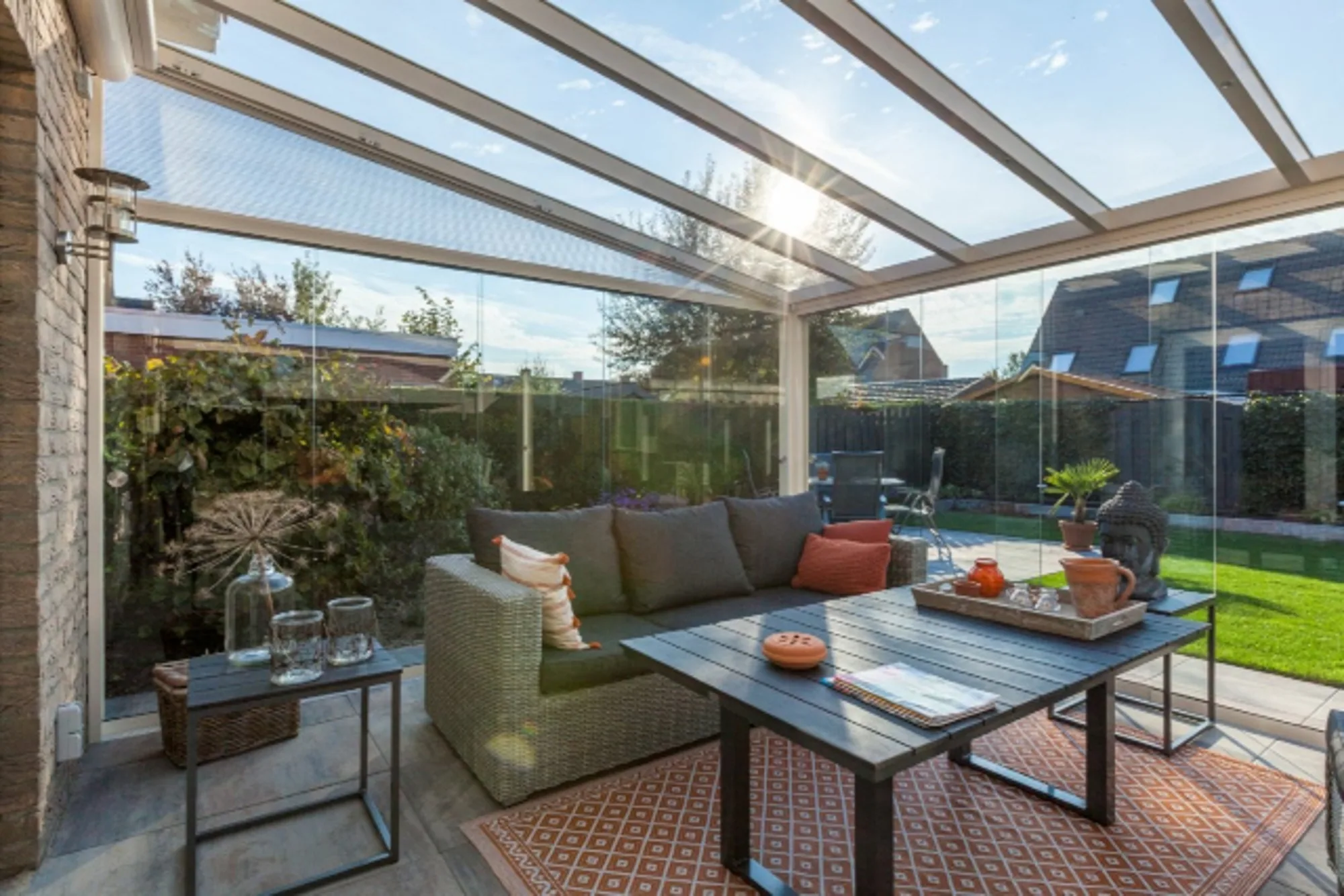
A proper covered structure — a veranda with a solid roof — removes all of that at a stroke. You can set the table knowing it’ll still be dry when you sit down. You can plan a birthday lunch outdoors without a nervous eye on the forecast. You can leave cushions out without them getting soaked. It sounds simple, because it is. But it’s the single biggest upgrade you can make to an outdoor dining space.
The two main roof options are glass and polycarbonate, and both work well for a dining area:
- Glass roofs let in maximum natural light, feel premium, and are virtually silent in rain — you’ll hear a gentle patter rather than a drum roll. Models like the Haven, Pavilion, and Vista all offer glass as standard or as an option.
- Polycarbonate roofs are lighter, more affordable, and offer natural UV filtering. They’re slightly noisier in heavy rain, but modern multi-wall polycarbonate is a long way from the old corrugated plastic sheets people sometimes imagine.
We cover the trade-offs between the two in detail in our glass vs polycarbonate comparison guide — it’s worth reading if you’re weighing up the options.
A roof is the foundation of year-round outdoor dining. Everything else — heating, lighting, furniture — works better and lasts longer once you have solid shelter overhead.
2. Choose the Right Size for How You Eat
One of the most common mistakes with outdoor dining spaces is making them too small. It always feels generous on a plan — and then you put a table and six chairs in it and realise you can barely push the chairs back to sit down.
Here’s a practical guide to sizing, based on what actually works when there’s food on the table:
| Dining Setup | Minimum Covered Area | Notes |
|---|---|---|
| 4 people (round or square table) | 3m × 2.5m | Cosy but workable — enough room to push chairs back comfortably |
| 6 people (rectangular table) | 4m × 3m | The sweet spot for most families. Room to move around the table and pass dishes |
| 8–10 people (large table) | 5m × 3.5m | Comfortable for entertaining. Enough space that it doesn’t feel cramped even with a full table |
| Dining + lounging | 6m × 3.5m minimum | Table at one end, sofa set at the other — two distinct zones under one roof |
These are covered areas, not total patio sizes. The shelter needs to cover the whole dining footprint plus a comfortable margin around the edges. If your table sits right at the edge of the roof line, driving rain will still reach your guests on the windward side.
Planning tip: Measure your existing dining table at home and add at least 80cm on each side for chairs and movement. Then check that fits comfortably within the covered area you’re considering. Better to discover it’s tight on paper than after installation.
If you’re not sure what size veranda would suit your space, our online quoter lets you enter your exact dimensions and see what’s available — with prices, no phone call required.
3. Furniture That Lives Outside
Under a veranda roof, your outdoor furniture is protected from the worst of the weather — but it’s still outside. Temperatures fluctuate, humidity changes with the seasons, and anything left out permanently needs to handle that gracefully.
Three principles worth following:
Invest in quality over quantity
A solid aluminium-frame dining set with weather-resistant cushions will look good and function well for ten years or more. A cheap flat-pack set from a supermarket will look tired after two seasons and wobbly after three. Under a covered space that you’ve invested in properly, the furniture is part of the experience — it’s worth getting right.
Match the furniture to the space
A massive 10-seater extending table looks impressive in the showroom but can overwhelm a 4m × 3m veranda. Equally, a small bistro set will look lost under a 6m span. Choose proportions that leave the space feeling generous, not cramped or empty.
Think about storage and covers
Even under a roof, cushions will benefit from being stored or covered during the depths of winter when you’re not using them daily. A simple weatherproof storage box at one end of the veranda keeps cushions fresh and saves you the hassle of carrying them in and out of the house every time. For the frames themselves — quality aluminium or treated hardwood — a veranda roof provides all the protection they need year-round.
4. Wind Protection: The Difference Between Pleasant and Miserable
A roof keeps the rain off. But if the wind is blowing through at 20mph, your napkins are on the lawn, your candles are out, and nobody’s enjoying their dinner. Wind protection on exposed sides transforms a covered space from “nice in good weather” to “comfortable in almost anything.”
The most effective options are glass side panels:
- Sliding glass doors — Full-height glass panels that slide open in good weather and close to create a sheltered space when it’s breezy. They’re the most versatile option: open them fully in summer and you barely know they’re there. Close them in autumn and you’ve got a calm, windproof dining room with a garden view.
- Fixed glass walls — Permanent glass panels on sides that are always exposed to prevailing wind. Lower cost than sliding doors and zero maintenance, but you lose the flexibility of opening them up.
Most outdoor dining spaces work best with a combination: sliding glass on the side you’ll want to open in warmer weather, and a fixed panel on the side that catches the prevailing wind. You don’t usually need to enclose all sides — the house wall provides shelter on one side, and the roof handles rain from above. One or two side panels on the exposed faces is usually enough to make a dramatic difference.
Wind protection is arguably the most underrated element of an outdoor dining setup. It’s the difference between using the space three seasons a year and using it comfortably in all four.
5. Heating: Extend the Season Into Genuine Winter
With a roof and wind protection in place, you’ll be comfortable dining outside through most of spring, summer, and autumn without any additional heating at all. Adding a heater pushes that into winter — November dinner parties, Christmas Day drinks, New Year’s Eve under the stars.
Infrared heaters are the right choice for outdoor dining, and here’s why they work so well:
- They warm objects and people directly, not the air. Conventional heaters warm the air around them, which promptly drifts away on the slightest breeze. Infrared works like the sun — you feel the warmth the moment it hits you, regardless of air temperature.
- They’re instant. No waiting 20 minutes for the space to “warm up.” Switch it on, sit down, feel warm.
- Under a veranda roof, the infrared energy reflects off the ceiling and surrounding surfaces, creating an envelope of warmth around the dining area. It’s surprisingly effective even on genuinely cold evenings.
- Running costs are modest. A typical 2kW infrared heater costs around 10–15p per hour to run. A three-hour dinner party in December costs less than 50p in electricity.
Wall-mounted or ceiling-mounted infrared heaters integrate cleanly into a veranda structure. No floor-standing units to trip over, no gas bottles to replace, no open flames near the table. One or two units positioned above the dining area is usually all you need.
Placement tip: Mount heaters so they’re directed at the seating area, not the table. You want warm diners, not warm plates. Ceiling-mounted units angled slightly downward work best for even coverage across a dining table.
6. Lighting: Set the Mood Right
Good lighting makes the difference between “eating outside” and “dining outside.” And it’s one of the easiest things to get right.
The best outdoor dining lighting uses three layers:
LED spotlights for practical light
Built into the veranda structure or mounted on the underside of the roof. These provide enough light to see your food, find your glass, and navigate safely. Many veranda models come with integrated LED lighting as standard or as an option — it’s worth specifying at the outset rather than retrofitting later.
Festoon or string lights for atmosphere
Warm white festoon lights draped across the space or along the edges of the roof create instant ambience. They’re inexpensive, easy to install, and transform a covered space from functional to genuinely inviting. Use warm white (2700K) rather than cool white — you want a relaxed, welcoming glow, not a dental surgery.
Candles for the table
Under a roof with wind protection, candles actually stay lit — which is more than can be said for an open patio. Hurricane lanterns, pillar candles in glass holders, or simple tea lights down the centre of the table add a layer of warmth and intimacy that no electric light can replicate.
The combination of all three — practical overhead light you can dim or switch off, atmospheric string lights around the edges, and candlelight on the table — creates a dining experience that genuinely rivals any restaurant terrace. And it’s in your back garden.
7. The Floor Matters More Than You Think
Your veranda dining area needs a surface that’s level, durable, comfortable underfoot, and easy to clean. Crumbs and spills are inevitable when you eat outside regularly — you want something you can sweep clean in 30 seconds, not something that stains the moment someone tips over a glass of red.
The three main options:
- Natural stone (sandstone, limestone, slate) — Beautiful, durable, and ages gracefully. Heavier to lay and needs occasional sealing, but nothing looks quite as good under a quality veranda. Expect to pay £40–£80 per m² for the stone itself, plus laying costs.
- Porcelain paving — Increasingly popular and for good reason. Almost zero maintenance, doesn’t stain, doesn’t need sealing, and available in finishes that closely mimic natural stone or timber. Slightly less character than the real thing, but hugely practical for a dining area. Around £30–£60 per m².
- Composite decking — Warm underfoot, low maintenance, and available in a range of colours. Works particularly well when the veranda is raised slightly above garden level. Good-quality composite decking runs £60–£100 per m² fully installed.
All three work well under a veranda. The right choice depends on your existing garden, your house style, and your budget. One thing to avoid: standard timber decking without a roof over it. It gets slippery when wet, needs annual treatment, and has a limited lifespan in the British climate. Under a veranda roof, though, even timber decking lasts significantly longer since it’s protected from the worst of the rain.
8. Seasonal Adjustments: Work With the Weather, Not Against It
A year-round dining space doesn’t mean pretending every month is July. Each season has its own character, and leaning into that — rather than fighting it — makes the experience better, not worse.
Spring (March – May)
Lighter evenings return. Open up any sliding glass panels and let the fresh air in. Birdsong, longer lunches, the smell of damp earth warming up. Keep a light throw on each chair back for cooler evenings. The garden is waking up, and a covered dining spot is the best seat in the house to watch it happen.
Summer (June – August)
Panels fully open. The veranda provides welcome shade during the hottest part of the day — you can eat comfortably at noon without squinting or sweating. Evening dining stretches to 10pm and beyond. If you have a polycarbonate roof, it naturally filters UV. Glass roofs can be fitted with blinds for particularly hot days.
Autumn (September – November)
This is the golden season for covered outdoor dining. Close the side panels against the wind, switch on the heater as evenings get cooler. There’s something deeply satisfying about a warm dinner under a glass roof while autumn rain streams down outside. Light the candles early — the shorter days make evening meals feel more special.
Winter (December – February)
Heater on, panels closed, fairy lights glowing. A covered outdoor space at Christmas is genuinely magical — mulled wine, a blanket on your lap, frost on the garden beyond the glass. You won’t eat outside every night in January, but the nights you do will be some of the most memorable meals of the year.
The key is having the flexibility to adapt — which is why features like sliding glass doors that open completely in summer and close in winter are so valuable. They let you tune the space to the conditions rather than being stuck with a fixed setup that’s either too open or too enclosed.
For more ideas on using a covered outdoor space through every month of the year, see our guide to year-round veranda uses.
9. What Does All This Actually Cost?
Let’s be straightforward about the numbers. A year-round outdoor dining setup has several components, and the total depends on how far you go with each one.
The Veranda (Shelter)
This is the biggest investment and the most important one. A Haven veranda at 5m × 3m — comfortably seating six for dinner — starts from around £5,300 including installation and VAT. Larger spans, glass roofs, and premium models like the Pavilion or Vista will be more. Our online quoter gives you an exact price for your specific dimensions in under two minutes.
Side Panels (Wind Protection)
Glass side options typically range from £1,000 to £3,000 per side, depending on the width and whether you choose fixed glass or sliding doors. Most dining setups need one or two sides enclosed, not all of them.
Heating
A good wall-mounted or ceiling-mounted infrared heater runs from £200 to £800 depending on output and brand. One unit is usually sufficient for a dining area up to about 4m × 3m. Larger spaces may benefit from two.
Furniture
A quality outdoor dining set for six ranges from £500 to £2,000+. Aluminium-frame sets with all-weather cushions sit at the higher end but last significantly longer than budget alternatives. Think of it as cost-per-use — a £1,500 set you use 200 times is better value than a £300 set you replace after 40.
Lighting
Integrated LED spotlights are often included with the veranda or available as an add-on. Festoon lights cost £20–£80 for a quality set. Candles and lanterns: whatever you fancy spending.
A realistic total for a complete year-round outdoor dining setup — veranda with glass roof, one side of sliding glass, infrared heater, quality furniture, and good lighting — falls somewhere in the £8,000 to £15,000 range depending on the size and specification you choose.
For a full breakdown of veranda costs specifically, our pricing guide covers every model and option with real numbers. And if you’re curious about the value a veranda adds to your property, our veranda value calculator can give you an estimate based on your home’s current value.
See What Your Outdoor Dining Space Would Cost
Our instant online quoter gives you a real price for your exact dimensions — no phone call, no obligation.
Get an Instant Quote Book a Time to Talk10. Is It Worth It?
Honestly? For most people who enjoy spending time in their garden, yes — and it’s not even close. A covered outdoor dining space doesn’t just give you more meals outside. It changes the way you use your home. The kitchen extends outward. Entertaining becomes easier and more relaxed. Weekend mornings involve coffee under a glass roof listening to the birds rather than peering out of the kitchen window wishing the rain would stop.
We hear the same thing from customers again and again: “We use it far more than we expected.” Once the space is there — sheltered, comfortable, ready to go — you find reasons to be in it. Breakfast. Lunch. Afternoon tea. Dinner parties. Saturday morning papers. A glass of wine after the kids are in bed. It becomes the default, not the exception.
The financial side makes sense too. A quality veranda adds genuine value to your property — our improve don’t move guide explores the numbers in detail. It’s not dead money. It’s an improvement that pays back in daily enjoyment and in property value when the time eventually comes to sell.
The key is getting the fundamentals right: proper shelter first, wind protection on exposed sides, heating for the colder months, and the right size for how you actually eat. Get those four things sorted and everything else — the furniture, the lighting, the finishing touches — is enjoyable refinement rather than essential groundwork.
Frequently Asked Questions
Can you really dine outside all year round in the UK?
Yes, with the right setup. A solid roof overhead, wind protection on exposed sides, and an infrared heater for colder months will let you eat comfortably outside from January to December. You won’t necessarily want to eat outside every single evening in February — but you absolutely can when you choose to, and autumn and spring become genuinely lovely dining seasons rather than months you spend watching the rain through the kitchen window.
What size veranda do I need for outdoor dining?
For a table seating four, you need a minimum covered area of about 3m × 2.5m. For six people, aim for 4m × 3m. For eight to ten, you’ll want 5m × 3.5m or larger. If you want dining and lounging in the same space, 6m × 3.5m is a comfortable starting point. Always measure your actual table and add at least 80cm on each side for chairs and movement.
Are infrared heaters any good for outdoor dining?
They’re ideal for it. Unlike conventional heaters that warm the air (which just drifts away on the breeze), infrared heats objects and people directly — similar to how the sun warms you. Under a veranda roof, an infrared heater will keep a dining area comfortable down to around 5°C outside. They’re energy-efficient, instant-on, and cost roughly 10–15p per hour to run. A three-hour dinner party in December costs less than 50p in electricity.
Is a glass or polycarbonate roof better for outdoor dining?
Both work well. Glass lets in more natural light, feels more premium, and is virtually silent in rain — which matters when you’re trying to have a conversation over dinner. Polycarbonate is lighter, more affordable, and provides natural UV filtering. For a dedicated dining space where ambience matters, many customers prefer glass — but polycarbonate is a perfectly good choice, especially on a tighter budget. We cover this in detail in our glass vs polycarbonate comparison guide.