8 April 2026 · 10 min read
UK Garden Trends 2026: What’s Shaping Our Outdoor Spaces This Year
From covered outdoor living rooms to smart-controlled louvre roofs, here’s what British homeowners are actually doing with their gardens in 2026 — and why the shift towards permanent, low-maintenance outdoor structures is accelerating.
Every year brings a fresh wave of garden inspiration — new plants, new paving colours, new furniture trends. Most of it is surface-level. But underneath the aesthetics, something more substantial has been changing in the way British homeowners think about their outdoor spaces, and 2026 is the year it’s become unmistakable.
The garden is no longer just a garden. It’s a room. An investment. A reason not to move house. And the choices people are making — the materials, the structures, the technology — reflect a shift towards permanence, usability, and genuine return on investment.
Here are eight trends shaping UK outdoor spaces this year, and what they mean if you’re thinking about doing something with your own garden.
1 The Outdoor Room Is Now Mainstream
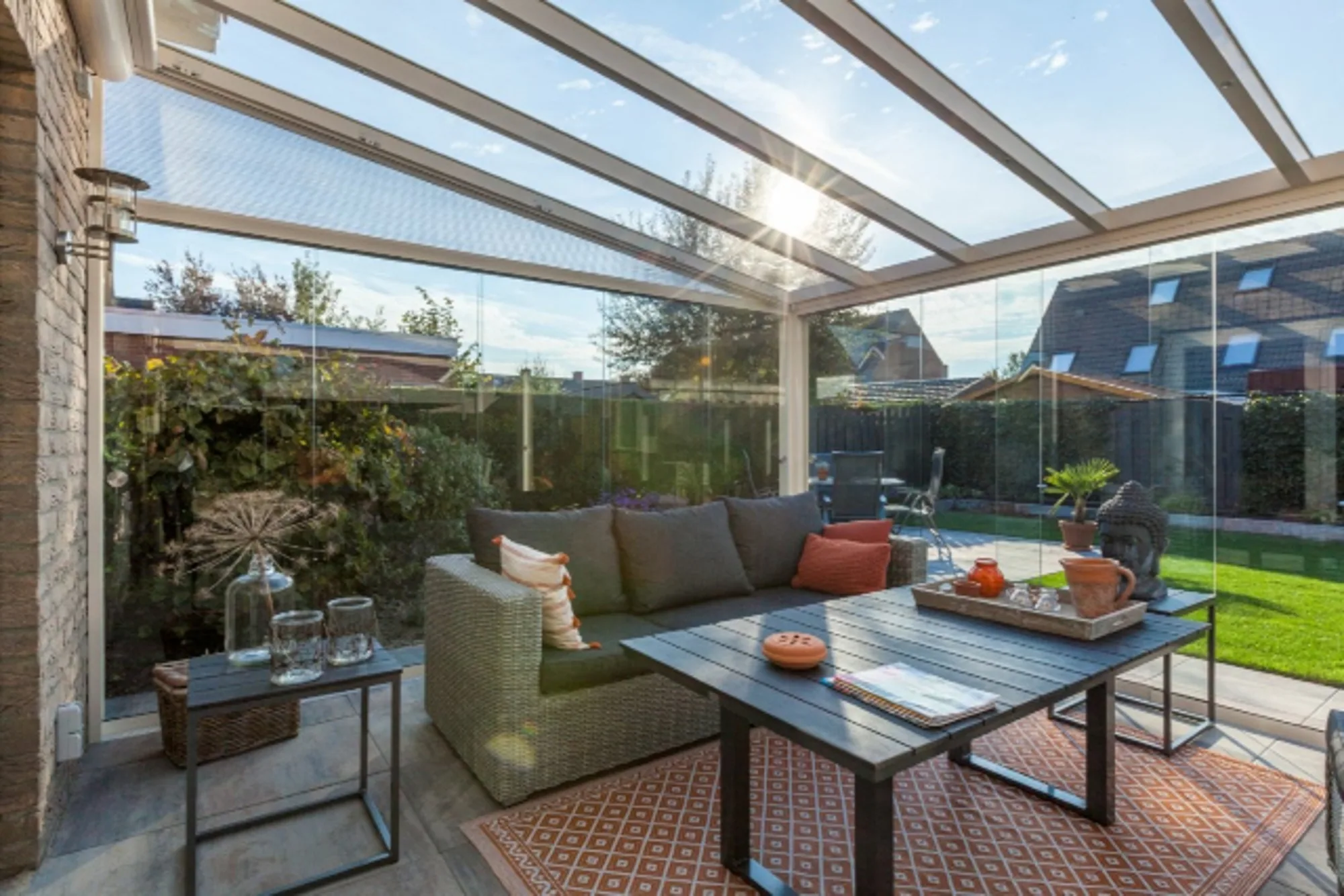
For years, the idea of a “covered outdoor living space” felt like something from a Grand Designs episode — aspirational but not quite attainable for most people. That’s changed completely. Verandas and purpose-built garden rooms have gone from niche to mainstream, and it’s not hard to see why.
The pandemic started it. People were stuck at home, staring at their gardens, and suddenly the idea of actually using that space year-round felt urgent rather than optional. But the trend hasn’t faded like pandemic sourdough. It’s accelerated. Estate agents report that covered outdoor space is now among the most requested features for buyers, and homeowners who already have it consistently say it’s the single best improvement they’ve made to their home.
The difference in 2026 is the quality of what’s available. Modern aluminium verandas bear no resemblance to the flimsy polycarbonate lean-tos of twenty years ago. A well-specified veranda is structurally engineered, watertight, and designed to last decades — more like an extension than a garden accessory. With options ranging from an entry-level Bolthole through to the premium Vista with its flat or apex glass roof, there’s a covered structure for virtually every home configuration and budget.
The core shift: people no longer see covered outdoor space as a luxury. It’s becoming a standard feature of a well-equipped home — like a decent kitchen or a good bathroom.
2 Low-Maintenance Everything
If there’s one theme that runs through almost every garden decision in 2026, it’s this: homeowners are done with annual maintenance. The romance of oiling a timber deck every spring has worn off. The reality of sanding, staining, and replacing rotting boards has caught up with the aesthetic.
The result is a wholesale shift towards materials that look good from day one and still look good ten, twenty, or thirty years later without intervention. Composite decking over timber. Porcelain paving over natural stone. And for garden structures, aluminium over wood — decisively.
This isn’t about laziness. It’s about pragmatism. British weather is relentless. UV in summer, freeze-thaw cycles in winter, rain for approximately 150 days a year. Materials that can’t handle that cycle without human help are materials that will eventually let you down.
Aluminium vs Timber: The Full Comparison
Since the choice between aluminium and timber is one of the most common questions we hear, here’s how they actually compare when you look beyond the initial price tag:
| Factor | Aluminium | Timber |
|---|---|---|
| Lifespan | 40–60+ years | 15–25 years (with maintenance) |
| Maintenance | Occasional wipe-down with soapy water | Annual sanding, staining, and sealing |
| Weather resistance | Fully resistant — no rot, warp, or rust | Susceptible to rot, warping, and splitting |
| Insect damage | Immune | Vulnerable (woodworm, beetles) |
| Upfront cost | Higher initially | Lower initially |
| Lifetime value | Significantly better — no ongoing costs | Ongoing treatment costs add up considerably |
| Recyclability | 100% recyclable, infinitely | Biodegradable but often treated with chemicals |
| Colour retention | Powder-coated — holds colour for decades | Fades and greys without regular treatment |
| Structural integrity | Engineered profiles — consistent over time | Can shift and settle as wood moves |
The real cost calculation: A timber garden structure might cost £3,000–£5,000 upfront, but over 20 years you’ll spend another £2,000–£4,000 on treatments, repairs, and eventual replacement. An aluminium structure costs more on day one but nothing thereafter. Over a 30-year window, aluminium typically costs 40–60% less in real terms.
3 Multi-Zone Gardens
The days of one undifferentiated lawn with a patio at the end are fading. In 2026, homeowners are thinking about their gardens the way they think about the inside of their homes: in zones, each with a purpose.
A typical multi-zone garden might include:
- A covered dining zone — under a veranda or garden room, with a proper table and chairs that stay dry year-round
- A lounging zone — comfortable seating, perhaps with a fire pit or infrared heater for cooler evenings
- A play area — visible from the main seating, safe surfacing, separated but not isolated
- A quiet corner — a bench, some planting, somewhere to sit with a book away from the main social area
- A utility zone — bins, compost, shed — screened from the rest with planting or fencing
This works even in modest gardens. You don’t need a half-acre to create distinct zones — changes in surface material, a step up or down, a structural element overhead like a veranda, or simply a shift in planting density can define a space without eating into square footage. We explore this in more detail in our guide to year-round veranda uses, which covers how covered and uncovered zones work together.
4 Year-Round Usability
This is the trend that changed everything for outdoor structures. The old assumption was that a veranda or garden room was a summer thing — nice for barbecues and the occasional June evening. The reality in 2026 is that well-specified covered outdoor spaces are used comfortably for eight to ten months of the year in the UK.
Three things make this possible:
- Infrared heaters: Mounted under the veranda roof, these provide instant, targeted warmth that works even in a breeze. Unlike patio heaters that heat the air (which then blows away), infrared heats objects and people directly. A couple of 2kW panels will keep a seating area comfortable down to around 5–8°C.
- Integrated LED lighting: Built into the structure rather than strung up afterwards. Proper lighting transforms an outdoor space from “summer only” to “any evening.” Dimmable strip LEDs in the roof rafters give ambient warmth; spotlights provide functional brightness for cooking and dining.
- Side panels: The single biggest upgrade for year-round use. Glass or polycarbonate side panels turn an open veranda into a sheltered room — blocking wind, driving rain, and that sideways drizzle that makes British weather so uniquely unhelpful. Options range from sliding glass walls to fixed glass panels to louvred walls that give you airflow control.
We’ve written a complete guide to using your veranda year-round, including month-by-month breakdowns of what’s comfortable and what extras help in each season.
The economics shift when you use an outdoor structure 10 months instead of 4. A £12,000 veranda used for a decade works out at £100 per month of use at 10 months/year — roughly £3.30 per day for an entire additional room.
5 Smart Integration
Garden technology has matured past the novelty stage. In 2026, smart outdoor features are less about showing off and more about genuine convenience — small automations that make you actually use your outdoor space more often.
The practical technologies gaining traction:
- Smart shading and lighting: Modern verandas can include integrated LED lighting, infrared heaters, motorised side blinds, and rain sensors that all integrate with smart home systems — transforming your outdoor space into a controllable, year-round living area.
- App-controlled LED lighting: Set scenes, schedule timers, adjust colour temperature — all from your phone. No more fumbling for switches in the dark.
- Integrated heating controls: Infrared heaters on smart plugs or built-in timers, so the space is warm before you step outside.
- Automated awnings and screens: Wind sensors retract awnings before a gust damages them; sun sensors deploy shade when UV levels rise.
None of this is complex or expensive to install. The key is building it into the structure from the start rather than retrofitting it afterwards. When heating, lighting, and roof control are all integrated into the original design, there are no visible cables, no exposed junction boxes, and everything works together seamlessly.
6 The “Improve Don’t Move” Effect
This has been building for years, but in 2026 the numbers make the case more strongly than ever. Moving house is eye-wateringly expensive. Stamp duty on a £350,000 property is £7,500. Add estate agent fees (1–2%), solicitor costs, survey fees, removal costs, and the inevitable “new house needs” spending, and you’re looking at £20,000–£30,000 just to change address — before you’ve added a single square metre of space.
A quality veranda, by contrast, typically costs £8,000–£25,000 depending on size and specification (see our full pricing guide for transparent breakdowns). It creates genuinely usable space, adds value to the property you already own, and avoids every one of those moving costs.
We’ve built a dedicated Improve Don’t Move Calculator that lets you compare the real cost of moving versus improving with a veranda. The numbers often surprise people. We also explore this in depth in our article on why improving beats moving.
The property value angle: Nationwide Building Society research shows that adding 10% to a home’s usable floor area can increase its value by up to 5%. On a £300,000 home, that’s a £15,000 uplift — which in many cases covers a significant proportion of the veranda’s cost. Use our Veranda Value Calculator to estimate the potential uplift for your property.
7 Sustainability and Conscious Choices
Sustainability in garden design has moved past token gestures. In 2026, it’s influencing material choices, drainage decisions, and structural investments in ways that are both environmentally responsible and practically superior.
The meaningful sustainability shifts:
- Aluminium over timber: Aluminium is 100% recyclable and can be recycled infinitely without losing quality. The energy required to recycle aluminium is just 5% of what’s needed to produce it from raw ore. By contrast, treated timber often can’t be recycled at all due to the preservative chemicals it contains.
- Permeable paving: As flash flooding becomes more common, planning authorities increasingly encourage (and sometimes require) permeable surfaces. Resin-bound gravel, permeable block paving, and gravel grids all allow rainwater to drain naturally rather than overwhelming storm drains.
- Rainwater harvesting: Veranda guttering directed into water butts or underground tanks provides free irrigation water and reduces mains usage. A 6m x 3m veranda roof collects roughly 10,000 litres per year in average UK rainfall.
- Native and pollinator-friendly planting: The wildflower meadow trend continues to grow, partly for environmental reasons and partly because these plantings are genuinely lower maintenance than traditional borders.
- LED lighting as standard: Integrated LED strips use a fraction of the energy of traditional garden lighting and last 25,000–50,000 hours before needing replacement.
The encouraging thing is that the sustainable choice and the practical choice increasingly align. Aluminium lasts longer and is recyclable. Permeable paving prevents flooding and avoids the need for planning permission in many cases. LED lighting costs less to run and lasts longer. You don’t have to choose between doing the right thing and doing the smart thing.
8 Professional Installation Over DIY
The DIY boom of 2020–2022 has given way to a more realistic assessment of what should and shouldn’t be done yourself. Planting, painting, minor landscaping — absolutely, do it yourself. Structural work, electrical integration, drainage, and anything that affects property value or insurance — 2026’s homeowners increasingly want professionals handling it.
The reasons are practical:
- Structural warranty: A professionally installed veranda comes with a manufacturer’s structural warranty. A DIY build comes with whatever confidence you have in your own engineering.
- Building regulations: While most verandas don’t require planning permission, electrical work integrated into structures needs to comply with Part P. Professional installers handle this as part of the job.
- Insurance implications: Home insurance policies sometimes exclude damage caused by amateur structural work. A documented professional installation avoids this entirely.
- Time and stress: A professional veranda installation typically takes one to two days. A DIY equivalent — even if you have the skills — will take weeks of weekends and significantly more stress.
- Resale value: Buyers (and their surveyors) look much more favourably on documented professional installations than DIY structures when assessing a property.
None of this is to say DIY has no place in the garden — it absolutely does. But the trend is clearly towards professional installation for anything structural, and towards DIY for the things that sit around it: planting, accessories, decorative elements, and ongoing care.
Thinking About Your Own Outdoor Space?
Our online quoter gives you real prices for verandas, garden rooms and carports in under two minutes — no phone call, no salesperson, no obligation.
Get an Instant Quote Book a Time to TalkWhat Does All This Mean for Your Garden?
The eight trends above share a common thread: permanence over temporariness. Low maintenance over annual upkeep. Usability over aesthetics alone. Investment over expenditure.
If you’re thinking about doing something significant with your outdoor space in 2026, the direction of travel is clear. Homeowners who invest in quality structures and materials — things that last decades, require minimal upkeep, and genuinely extend the usable months of the year — are the ones who get the most value from their gardens, both in daily enjoyment and in property value terms.
You don’t have to do everything at once. A covered structure is the foundation that makes everything else work better: the dining zone stays dry, the lounging area stays warm, the smart lighting has somewhere to integrate into. Start with the structure, and the rest follows naturally.
If you’re curious about what a veranda or garden room would cost for your specific situation, our online quoter gives you a real price in under two minutes. No phone call, no salesperson knocking on your door, no obligation whatsoever. It’s just a number to help you think about what’s possible.
Frequently Asked Questions
What are the biggest UK garden trends for 2026?
The biggest trends include covered outdoor living spaces (verandas, garden rooms and carports), low-maintenance materials like aluminium and composite decking, multi-zone garden layouts, year-round usability with heating and lighting, and smart garden technology such as motorised louvre roofs and app-controlled LED lighting.
Is aluminium better than timber for a garden structure?
For most homeowners, aluminium offers significantly better lifetime value. It lasts 40–60+ years versus 15–25 for timber, requires virtually no maintenance, is fully recyclable, and resists rot, warping, and insect damage. Timber costs less upfront but needs annual treatment and has a much shorter usable lifespan.
Can you use a veranda all year round in the UK?
Yes. With infrared heaters, integrated LED lighting, and optional side panels to block wind and rain, a well-specified veranda is comfortable from March through to November — and usable even on dry winter days. Many homeowners report using their covered outdoor space 8–10 months of the year. See our full guide to year-round veranda uses.
Is it cheaper to improve your home or move to a bigger one?
In most cases, improving is significantly cheaper. Moving a £300,000 home typically costs £20,000–£30,000 in stamp duty, estate agent fees, solicitors, and removals. A quality veranda or garden room costs a fraction of that while adding genuine usable space and property value. Try our Improve Don’t Move Calculator to compare the numbers for your situation.